Tinder Photos That Get Matches: A Practical Guide for Men
Tinder is not a profile app. It is a card app. Most people swipe from the first image without opening anything, on a phone screen a few centimetres wide, in a few hundred milliseconds. That single fact decides almost every rule below: your first photo is not part of your profile, it is your profile.
Choosing the first photo
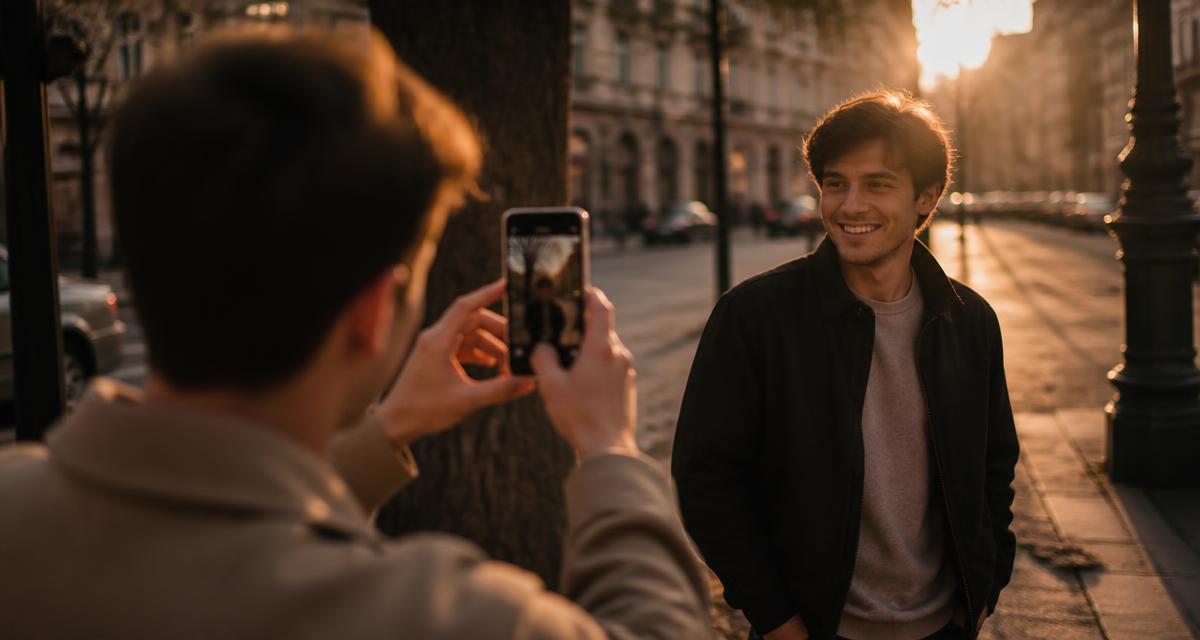
The first photo has one job: show a real, clearly lit face that looks like someone worth a second of attention. Not your best holiday, not your car, not your group of friends.
- Head and shoulders, face filling a good share of the frame — remember it is being judged at thumbnail size.
- Eyes visible and pointed at the camera. No sunglasses, no cap brim shadow.
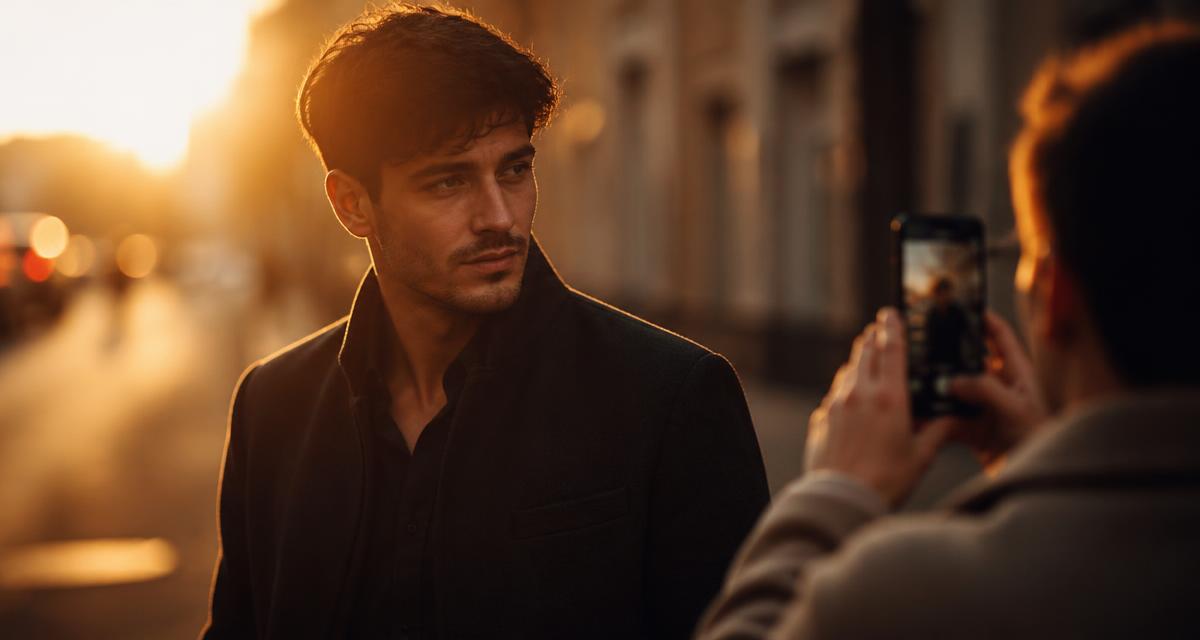
- Soft natural light on the face: outdoors in shade, at golden hour, or facing a window.
- A genuine smile. It outperforms the moody look on the opening card almost every time.
- One person in the frame — you. Ambiguity on photo one is a swipe left.
What follows, and in what order
| Card | Shot | Why it is there |
|---|---|---|
| 1 | Clear, warm face portrait | Wins or loses the swipe |
| 2 | Full body, clothes that fit | Answers the question people scroll for |
| 3 | Doing something you actually do | Gives a reason to message you |
| 4 | Social shot where you are obvious | Shows you exist among people |
| 5 | Outdoors or travel, environment visible | Adds variety, avoids the samey set |
| 6 | Personality shot — dog, instrument, workshop | Makes you memorable after the swipe |
Six is plenty. Adding four weak photos to six strong ones does not add options — it lowers the average, and the average is what people react to.
How to actually shoot them
- 1Use the rear camera. Front cameras are wide-angle and enlarge whatever is closest to the lens — usually your nose.
- 2Stand about two metres from the camera and zoom with your feet, not the pinch gesture.
- 3Keep the lens at your eye level or a fraction above. Below eye level is the least forgiving angle there is.
- 4Turn your torso about 30 degrees off-axis, bring your face back to the lens.
- 5Shoot bursts while talking or laughing. Thirty frames gives you one keeper; three poses give you none.
Test the lineup instead of guessing
You do not need analytics to know whether a photo works. Run the profile for two weeks, note roughly how many matches it produces, then swap only the first photo and run it for another two weeks. Change one variable at a time and the answer becomes obvious fast. Most men discover their instinctive favourite is not their best performer.
Want a second opinion before you swap anything? Caliber scores one photo for hair, beard, grooming, style and overall first impression in about 60 seconds — free, no signup.
Take the Free TestWhere to go next
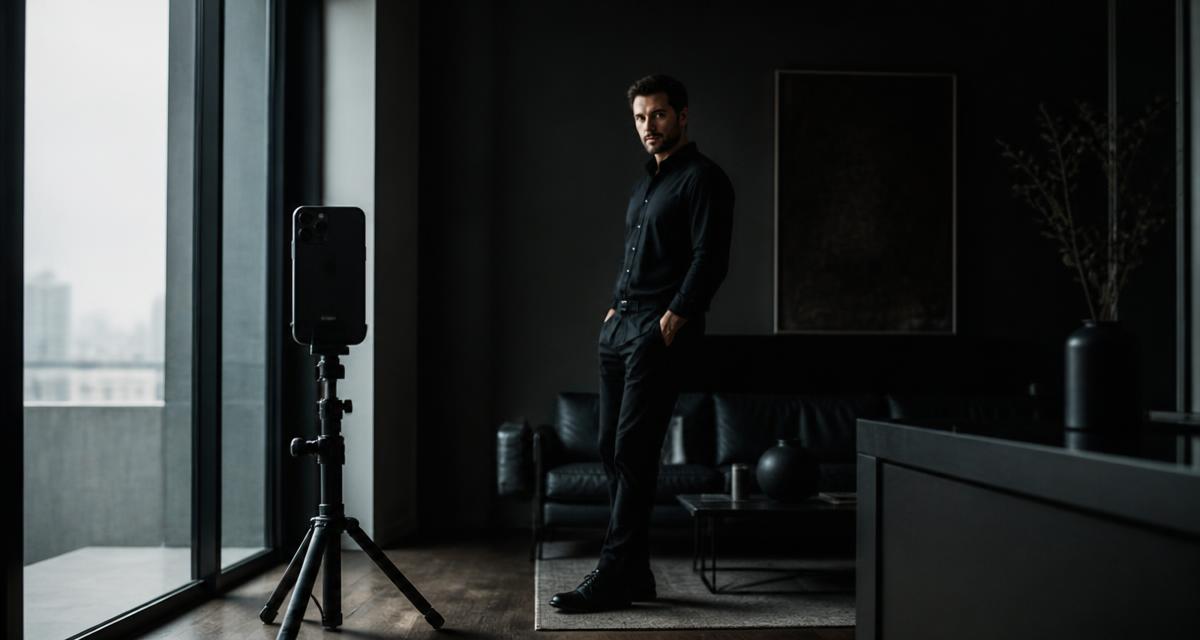
For the underlying photo principles across every app, read the complete dating-photo guide. For the specific errors worth removing first, read the mistakes guide. If nobody can shoot for you, the self-shot guide covers the tripod-and-timer version.